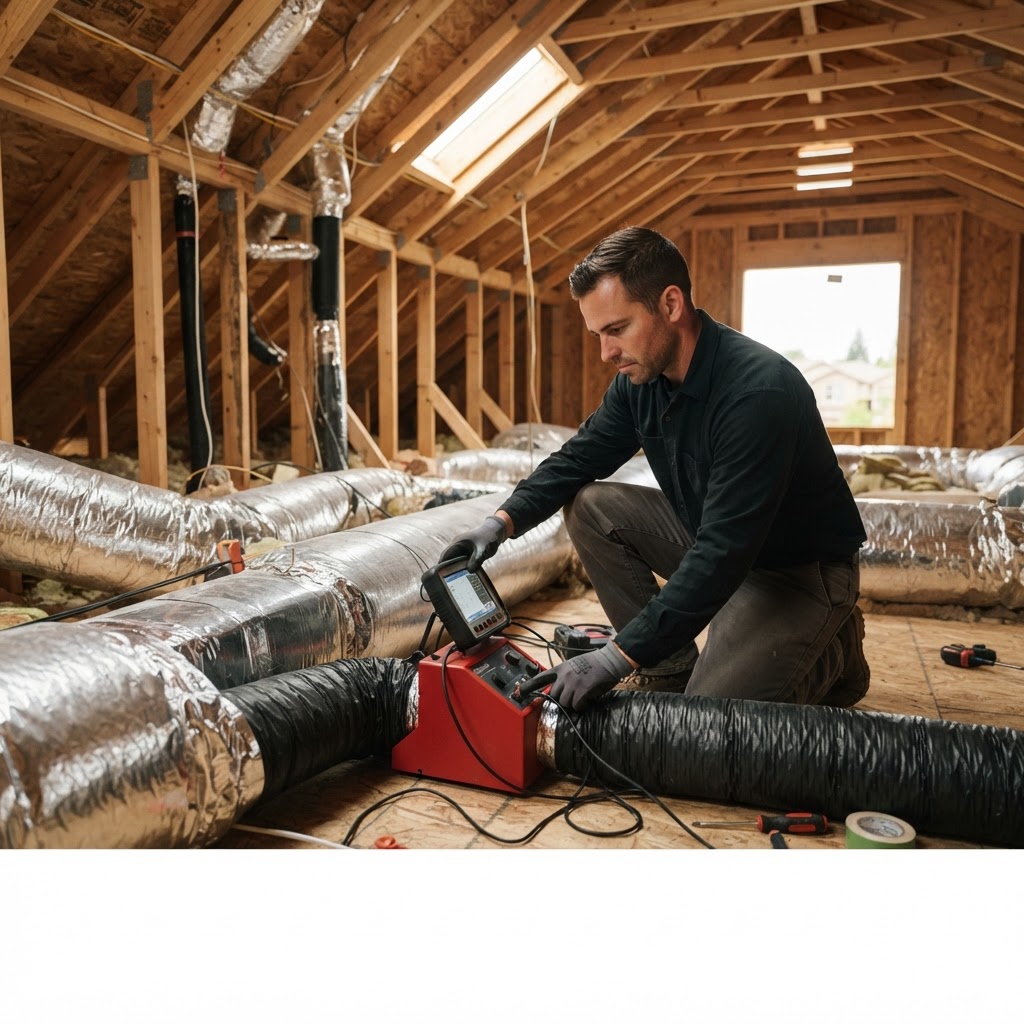
Struggling with HVAC permit delays in Sacramento? Learn how to navigate 2026 ECC/HERS testing requirements to get your project signed off quickly.
Why Your HVAC Permit is Stuck in Limbo
If you are a contractor or homeowner in the Sacramento region, you have likely felt the sting of a stalled HVAC permit. Since the 2025 Energy Code took full effect on January 1, 2026, the bar for compliance has shifted. We see this on job sites every week: a system is installed, the equipment is top-tier, but the final sign-off remains elusive because the ECC (formerly HERS) testing documentation is missing or incomplete.
In Roseville, Folsom, and across the Sacramento Valley, building departments are no longer accepting "close enough." They require precise verification that your new heat pump or high-efficiency furnace meets the current standards. If your CF2R and CF3R forms aren't perfectly aligned with the field reality, your permit will sit in the queue indefinitely. Understanding how to bridge the gap between installation and final inspection is the only way to keep your project moving.
The 2026 Reality: Why Documentation Matters More Than Ever
Under the current code cycle, the California Energy Commission has tightened the requirements for system performance. It is not just about the equipment efficiency rating anymore; it is about how that equipment interacts with the home's existing ductwork and building envelope.
When our raters arrive at a site in Elk Grove or Citrus Heights, we aren't just checking a box. We are verifying that the system actually delivers the efficiency promised on paper. If the duct leakage exceeds the threshold or the refrigerant charge is off, the system fails. This isn't a bureaucratic hurdle; it is a performance standard designed to ensure that the energy you pay for actually keeps the home comfortable.
Common Pitfalls in the CF2R/CF3R Process
We often see projects delayed because the CF2R (Certificate of Installation) was submitted with incorrect data. If the model number on the form doesn't match the physical unit, or if the duct leakage targets were calculated using outdated assumptions, the building inspector will flag it.
- Mismatched Equipment: Always verify the AHRI certificate matches the installed indoor and outdoor units.
- Duct Leakage Assumptions: Don't guess your leakage rates. If you are sealing ducts, test them early to ensure you hit the target before the drywall goes up.
- Incomplete Forms: Every field must be filled. A single missing signature or date can trigger a rejection from the local jurisdiction.
Field Observations: What We See in Sacramento
Last month, we visited a retrofit project in Roseville where the contractor had installed a high-efficiency heat pump. The installation was clean, but they failed their initial duct leakage test by a significant margin. The culprit? A disconnected return boot in the attic that was hidden behind insulation.
Because they scheduled our ECC testing in Sacramento early, they were able to fix the leak before the final building inspection. Had they waited until the last minute, they would have been forced to open up finished ceilings or walls, turning a simple permit sign-off into a costly renovation. We recommend testing your ductwork as soon as the connections are made, not after the system is fully commissioned.
How to Streamline Your Compliance Strategy
To avoid the common bottlenecks that plague Sacramento projects, you need a proactive approach to compliance. Start by integrating your testing schedule into your project timeline from day one.
- Pre-Installation Review: Ensure your design documents match the equipment you plan to install. If you are unsure, get a fast quote to verify your compliance path before you order the unit.
- Early Testing: Don't wait for the final inspection to call your rater. If you are doing a major alteration, test the ductwork while the attic is still accessible.
- Digital Accuracy: Use the CHEERS registry to manage your forms. Double-check every entry against the physical equipment labels.
Partnering with T3 Energy for Success
We know that your reputation depends on getting the job done and getting paid. Our team specializes in helping contractors navigate the nuances of the 2026 Energy Code. Whether you are working on a new build in Folsom or a complex retrofit in downtown Sacramento, we provide the technical expertise to ensure your paperwork is as solid as your installation.
If you want to learn more about our process, check out about T3 Energy to see how we support local pros. We cover all our service areas with the same commitment to accuracy and speed, ensuring that your permit stays on track from start to finish.
Frequently Asked Questions
Why did my HVAC system fail the duct leakage test?
Most failures occur due to disconnected boots, poorly sealed plenums, or leaks at the air handler connection. In older Sacramento homes, we often find that the existing ductwork is simply too degraded to meet current code, requiring a full seal or replacement to pass.
Can I perform my own ECC testing?
No, ECC/HERS testing must be performed by a certified third-party rater who is independent of the installation contractor. This separation ensures that the verification process remains objective and compliant with state regulations.
How long does it take to get my CF3R forms processed?
Once the testing is complete and the data is uploaded to the registry, the forms are typically available for the building department to view immediately. If all data is accurate, you can usually clear your permit requirements within 24 hours of a successful test.
Does a simple equipment swap require HERS testing?
Yes, most HVAC equipment change-outs in California now trigger mandatory HERS verification, including duct leakage testing and refrigerant charge verification. Even if you aren't changing the ductwork, the code requires you to prove the system is performing efficiently.
Need Title 24 or ECC testing?
Fast scheduling across the Sacramento region and California.
Get a Fast Quote