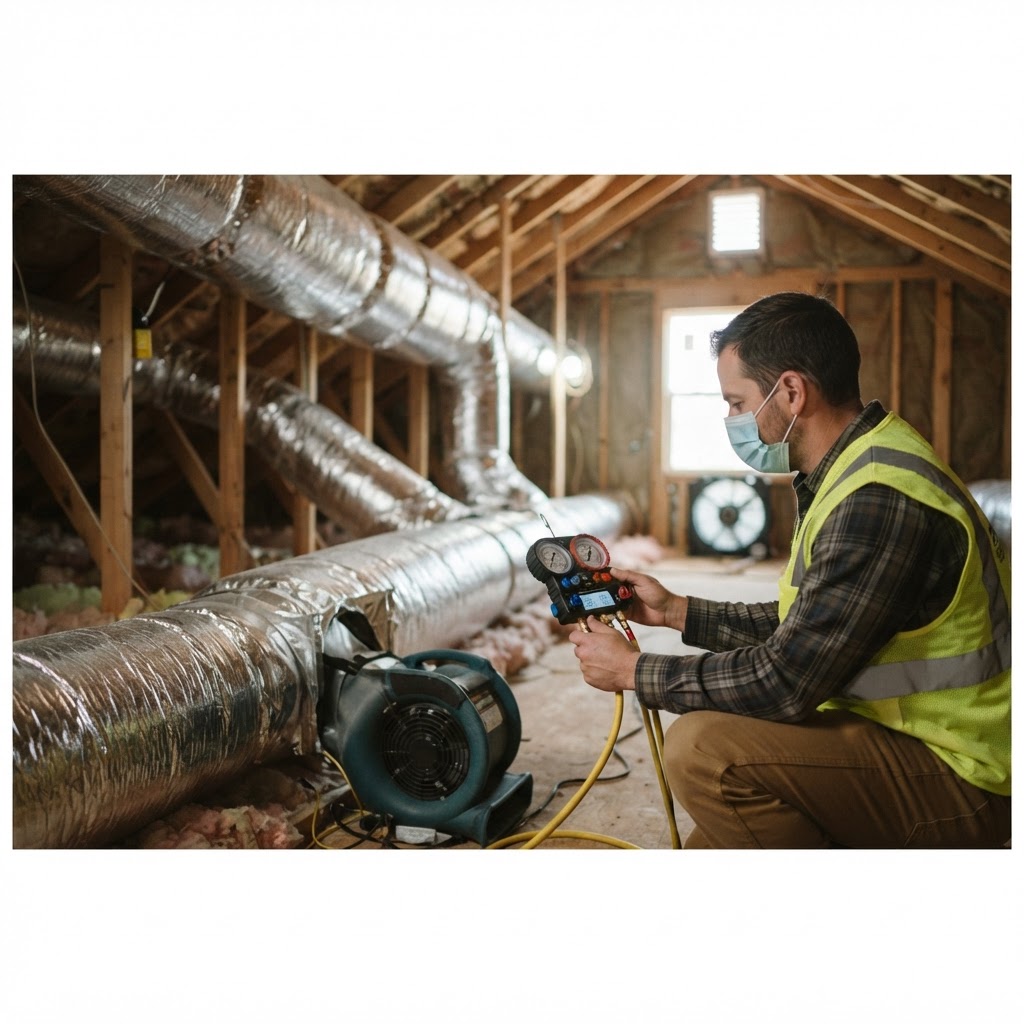
Struggling with 2026 Title 24 HVAC compliance? Learn why duct leakage testing is the most common hurdle for Sacramento contractors and how to pass.
Mastering Duct Leakage Testing Under the 2026 Energy Code
If you are a contractor working in the Sacramento region, you know that the 2026 building energy code cycle has tightened the screws on HVAC performance. We see it on job sites from Roseville to Elk Grove every single week: a system is installed perfectly, the equipment is top-tier, but the project hits a wall during the final inspection because of duct leakage. Under the current 2025 Building Energy Efficiency Standards, which took effect January 1, 2026, duct leakage testing is no longer just a box to check—it is a critical performance metric that determines whether your permit gets closed out or flagged for correction.
Why Duct Leakage is the Primary Compliance Hurdle
In our experience as HERS raters, duct leakage is the most common reason for failed ECC testing in Climate Zones 11 and 12. When ducts leak, your client’s HVAC system works harder to condition the air, leading to higher utility bills and uneven temperatures. The California Energy Commission (CEC) has set strict thresholds to ensure that the air you pay to heat or cool actually reaches the living space.
When we arrive on-site for a blower door or duct test, we often find that the culprit isn't the equipment itself, but the connections. Even a small gap in a return plenum or a poorly sealed boot can cause a system to exceed the allowable leakage percentage. If you are looking for ECC testing in Sacramento, understanding these thresholds before you seal the system is the difference between a one-day sign-off and a costly return trip.
The 2026 Compliance Workflow
To stay ahead of the curve, you need to treat the duct system as a pressurized vessel. Here is how the process typically unfolds for a standard HVAC replacement in the Sacramento area:
- Pre-Installation Planning: Ensure your design accounts for the specific duct leakage requirements mandated by the CF1R report.
- Installation & Sealing: Use high-quality mastic or approved foil tape on all joints. We often see contractors rely on duct tape, which dries out and fails within a few years—this is a recipe for a failed test.
- The HERS Verification: Once the system is installed, a third-party rater performs the diagnostic test. We measure the leakage and generate the CF3R form, which is required for the building department to issue your final permit.
Common Field Failures We See in Sacramento
We frequently encounter scenarios where a system fails because of "hidden" leaks. For example, we recently inspected a retrofit in Folsom where the contractor had done a great job sealing the visible joints, but the return air box was completely unsealed at the floor joist. That single oversight caused the entire system to fail the leakage test.
Another common issue is the use of flexible ducting that has been crushed or kinked during installation. Not only does this restrict airflow, but it also creates stress points where the inner liner can tear, leading to significant leakage that is nearly impossible to patch after the drywall is up. If you are unsure about your current installation methods, our service areas include comprehensive site consultations to help you identify these risks before the rater arrives.
Documentation: The Paper Trail to Approval
Compliance is only as good as your paperwork. The building department requires a complete set of forms to verify that the work meets the 2026 standards. This includes:
- CF1R (Certificate of Compliance): Generated during the permit application phase.
- CF2R (Certificate of Installation): Completed by the installing contractor to confirm the system was installed per code.
- CF3R (Certificate of Verification): The final report provided by the HERS rater after the diagnostic testing is complete.
If you are missing any of these, your permit will remain open, which can cause major headaches for homeowners during future property sales. If you need help navigating these forms or need to get a fast quote for your next project, our team is ready to assist.
Tips for Passing Your Next Test
- Seal Early: Don't wait until the end of the day to seal your ducts. Do it as you go.
- Check the Boots: The connection between the duct and the register boot is the most common leak point. Use a generous amount of mastic.
- Verify Equipment: Ensure the model numbers on your equipment match the CF1R exactly. A mismatch here can invalidate the entire test.
For more information on our background and how we support local contractors, feel free to read about T3 Energy.
Frequently Asked Questions
What happens if my HVAC system fails the duct leakage test?
If your system fails, we will provide a report detailing exactly where the leaks are located. You will need to seal those specific areas and then schedule a re-test to verify that the system now meets the required leakage thresholds.
Is duct leakage testing required for every HVAC replacement?
Yes, under the 2026 California Energy Code, any HVAC replacement or installation involving 40 or more feet of new or altered ductwork requires mandatory HERS verification, including duct leakage testing.
How long does a typical duct leakage test take?
For a standard residential system, the testing process usually takes between 45 and 90 minutes. This includes setting up the equipment, running the diagnostic, and documenting the results for your CF3R form.
Can I perform the duct leakage test myself?
No, the California Energy Commission requires that duct leakage testing be performed by a certified, third-party HERS rater. This ensures the integrity of the data and compliance with state energy standards.
Why does the building department need these forms?
The building department uses the CF1R, CF2R, and CF3R forms to verify that the energy-efficiency measures required by Title 24 were actually installed and tested. Without these, they cannot confirm the project meets the legal requirements for a final permit sign-off.
Need Title 24 or ECC testing?
Fast scheduling across the Sacramento region and California.
Get a Fast Quote