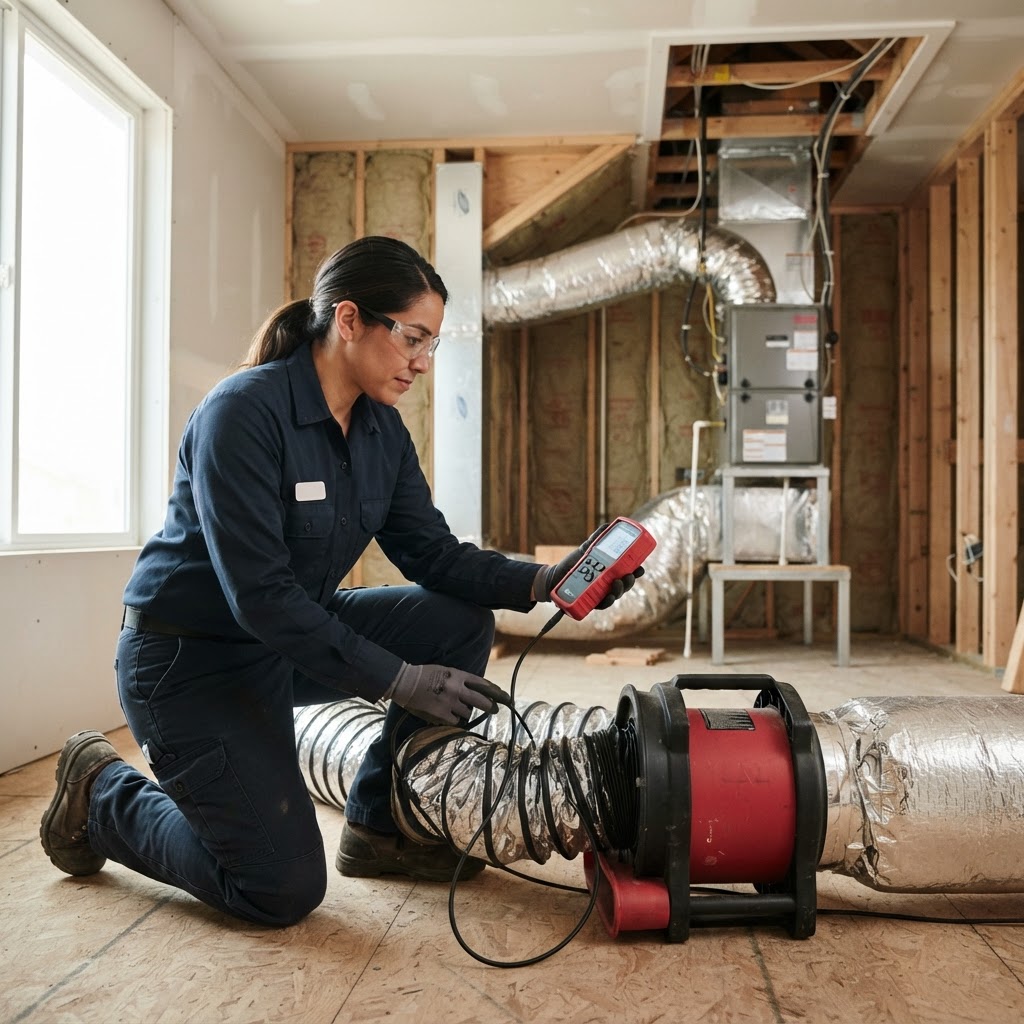
Struggling with 2026 Energy Code compliance? We break down common ECC/HERS testing failures in the Sacramento region and how to pass your inspection fast.
If you are a contractor or homeowner in the Sacramento region, you know that the 2026 Title 24 Energy Code has tightened the screws on HVAC installations. Our team sees projects stall every week because of a misunderstood compliance form or a failed diagnostic test that could have been avoided with better planning. Whether you are working on a retrofit in Roseville or a new build in Folsom, ECC testing in Sacramento is no longer just a checkbox—it is a critical phase of your project timeline.
The Reality of 2026 Energy Code Compliance
The shift from the legacy HERS terminology to the Energy Code Compliance (ECC) program hasn't changed the physics of your HVAC system, but it has certainly increased the scrutiny. As of January 2026, building departments across California are using more rigorous validation tools to ensure that your paperwork matches the reality on the job site. We regularly encounter situations where a contractor installs a high-efficiency heat pump, but the duct system hasn't been properly sealed, leading to an immediate failure during the mandatory duct leakage test.
Why Your System Might Fail the First Time
Most failures we see in our daily field work stem from a few common culprits:
- Poor Duct Sealing: Even small, unsealed transitions in the attic can push your system over the leakage threshold.
- Restricted Airflow: If your return air path is undersized, the system will struggle to meet the required airflow, resulting in a failed CF-3R form.
- Incomplete Documentation: Missing CF-1R or CF-2R documentation before the rater arrives is the fastest way to delay your final sign-off.
Navigating the Sacramento Climate Zone Challenges
Living and working in Climate Zones 11 and 12 means our HVAC systems endure extreme temperature swings. A system that performs well in the mild spring may show significant leakage or airflow issues when the mid-summer heat hits the attic space. We advise our clients to prioritize duct sealing and insulation quality early in the installation process. If you want to see how we tackle these specific regional requirements, you can learn more about T3 Energy and our extensive experience in the Sacramento Valley.
Step-by-Step Compliance Checklist for 2026
To keep your project moving toward final inspection without unnecessary callbacks, follow this field-tested workflow:
- Verify the CF-1R: Ensure your energy consultant has modeled your specific equipment. If the CF-1R specifies a certain blower speed or duct insulation R-value, your installer must hit those targets exactly.
- Pre-Test Your Ductwork: If you have any doubts about your sealing work, perform a quick in-house pressure test before closing up the system. It is much easier to fix a loose connection while you are still on-site.
- Schedule the Rater Early: Do not wait until the final hour. By coordinating with your ECC rater during the installation phase, you can often troubleshoot potential failures before the official test is recorded.
- Organize Your Photos: Many registries now require photographic evidence of duct sealing and insulation installation. Keeping a digital folder for every job makes the upload process painless.
Handling the Transition to 2026 Standards
The 2026 cycle places a heavy emphasis on electrification and heat pump adoption. We are seeing more projects move away from traditional gas furnaces, and this shift requires a new approach to refrigerant charge verification and fan watt-draw testing. Don't assume that because an installation method worked in 2022, it will pass muster today. When you are ready to get your project on the schedule, you can get a fast quote to ensure you have a certified rater ready to verify your installation compliance.
Our Service Commitment to You
We understand that time is money for both contractors and homeowners. Our goal is to provide the diagnostic certainty you need to close your permit and move on to the next job. Whether you are working in our service areas or require specialized consulting for a complex custom build, our team is committed to accuracy and speed.
Frequently Asked Questions
Do I really need ECC testing for a simple HVAC change-out?
Yes. In nearly every jurisdiction in California, replacing an air conditioner, furnace, or heat pump triggers mandatory ECC field verification. Even if it feels like a routine swap, the building department will require documented proof of compliance to close the permit.
Can my HVAC installer perform the required ECC tests?
No. California requires a third-party, independent ECC rater to perform diagnostic testing and upload results to the registry. This separation is designed to ensure the test results are unbiased and accurate.
What happens if my system fails the duct leakage test?
If your system fails, your rater will provide a report detailing where the leaks are. You will need to address those specific issues—usually by adding mastic or foil tape to connections—and then schedule a re-test to verify that the system now meets the required leakage threshold.
How does the 2026 code affect heat pump installations?
The 2026 code provides more favorable compliance pathways for heat pumps, but it also mandates specific field verification for refrigerant charge and airflow. Because heat pumps are more sensitive to airflow restrictions than legacy systems, professional rater verification is more important than ever to ensure the equipment operates at its rated efficiency.
What documentation is required at the final building inspection?
You must have the signed and registered CF-2R (Installation) and CF-3R (Field Verification) forms ready for the building inspector. Without these forms correctly uploaded to the official registry, the inspector will not grant a final sign-off on your permit.
Need Title 24 or ECC testing?
Fast scheduling across the Sacramento region and California.
Get a Fast Quote